
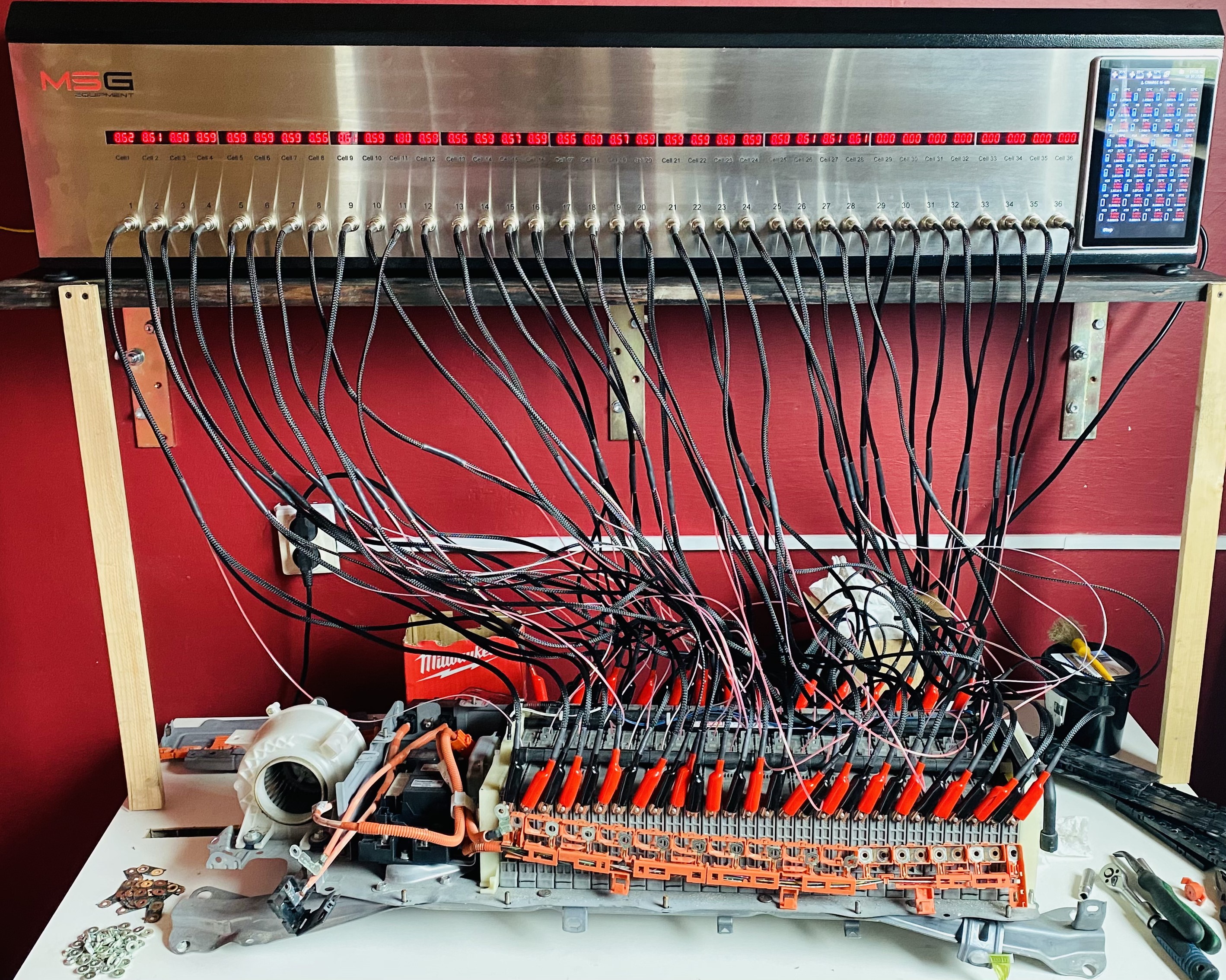
A hybrid battery is made of many cells joined into modules. Over time voltage differences between the cells grow — the car limits power, fuel use rises, and hybrid-system messages can appear on the dash.
Symptoms of imbalance
- A sudden drop in the SOC bars (battery level) on the display
- The engine more often “props up” the pack, even though the temperature is OK
- Fault codes about module voltages (after a computer diagnostic)
What does balancing give?
Professional balancing (often as part of a rebuild) evens out the cells and restores part of the usable capacity. It makes sense when the rest of the pack is healthy and the weak cells are not permanently damaged.
When is a module replaced?
If a cell has an internal short, drastically low capacity or mechanical damage, replacing a single module is sometimes cheaper than the whole pack — but it needs matching and a test after fitting.
Without measuring every module you cannot honestly promise a “100% rebuild” — the test report is what counts.
What to avoid
Home-made “hacks” and unusual cell charging with no temperature control can damage the BMS. The safe route is a workshop with measurements recorded before and after.
Suspect a weak cell in the pack? Have the modules diagnosed with us.
Visit Green Serwis in Krakow — we specialise in Toyota and Lexus hybrids.
Book a visitSummary
Regular diagnostics and careful use keep a hybrid free of surprises. If you have questions after reading — see our hybrid service or contact us.
